The 1967 shootout at Philadelphia Union Hall 107
I Heard You Paint HousesThe 1967 shootout at Philadelphia Union Hall 107 was the violent culmination of a factional fight over control of Teamsters Local 107, its jobs, and the trucking companies those jobs gave men access to. In Frank Sheeran’s retrospective account, a crowd of thousands gathered around the union hall, gunfire erupted the next morning, and a wounded ally was rushed to medical care. The shooting’s beginnings remained disputed; its consequences lasted for years, reaching from arrests and jail time to a murder charge that was ultimately dismissed after repeated prosecution delays.
Causes and the rally
The immediate background was a round of firings in Philadelphia that, Sheeran recalled, left tensions rising. Joey McGreal and his crew wanted to take control of Local 107 outright and secure its union jobs. Sheeran attributed a further purpose to their campaign: using those positions to pressure trucking companies and enrich themselves. The dispute was therefore not simply over who occupied the union hall. Control of the local meant control over valuable jobs and influence over employers.
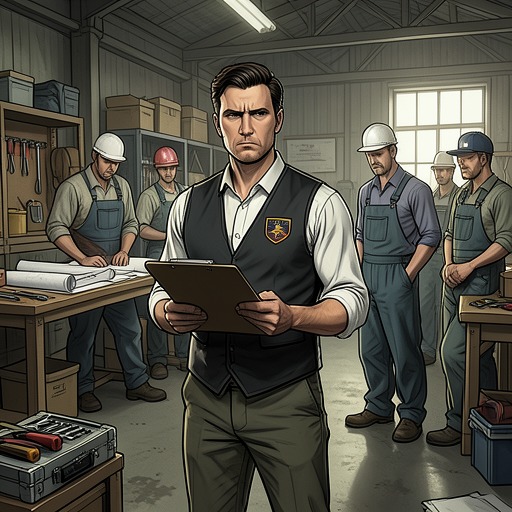
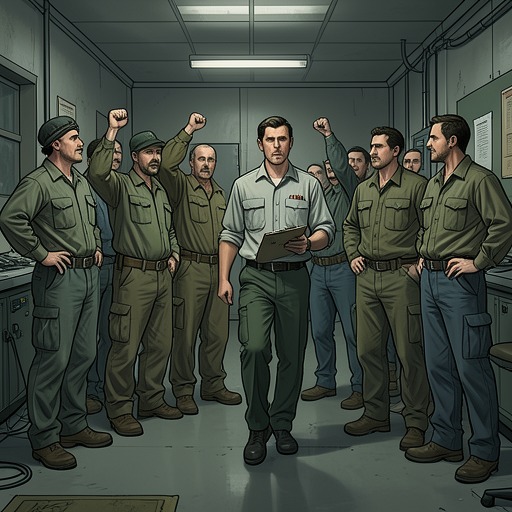
One September night in 1967, the competing factions converged outside the hall on Spring Garden Street. Sheeran estimated that about 3,000 people had gathered, drawn from different sides of the local’s internal conflict. People moved back and forth, shouting; fistfights broke out. McGreal had brought muscle from downtown, including Robert “Lonnie” DeGeorge and Charles Amoroso. Sheeran distinguished these men from the Italian muscle associated with Angelo Bruno. The crowd and the threat to the building put the local’s organizers, business agents, and officers under pressure to give way. Mounted police had their hands full that night.
Sheeran emphasized that he was not at the rally. Late that night, Fitz called him at home and ordered him to be at the hall the next morning, anticipating that the confrontation would intensify. Fitz’s instruction was, “Get things under control.” Sheeran understood that command as a request to assemble force. He called Angelo Bruno and borrowed men, including Joseph Ciancaglini and Rocco Turra. He placed men inside the hall to watch from its windows and others outside on the street. In his account, two groups then approached one another from opposite ends of Spring Garden Street: McGreal’s people from one direction, and those loyal to the local from the other.
The shooting and its disputed beginning
Gunfire began suddenly. Sheeran recalled that the first shot came from behind him and passed close by his head. He was later accused of signaling for the shooting to start, specifically of pointing at DeGeorge before someone on his side shot him. Sheeran did not confirm that allegation. Instead, he stressed the confusion: so many shots were being fired, he said, that no one could establish who was shooting at whom or who had begun the exchange. The mounted police who had been present the previous night had not yet arrived that morning.
Joseph Ciancaglini was hit twice in the abdomen. Sheeran pulled him into a car and drove him to his uncle’s doctor, John Hansen, who warned that the wounds were likely fatal without immediate hospital treatment. Sheeran took Ciancaglini to St. Agnes Hospital, across the street from the doctor’s office, laid him down, and rattled garbage cans until someone came out to take him inside. Ciancaglini survived. The account’s close attention to this improvised rescue sits alongside its uncertainty about the shooting itself: Sheeran gives a concrete sequence of actions, but leaves the responsibility for starting the gunfire unresolved.
Flight, arrest, and the immediate cost
After the shooting, Sheeran drove to Newport, Delaware, and hid in an apartment above a bar while events settled. He called Fitz with a terse report: “One down. Two limping,” referring to the casualties. Fitz panicked and hung up. Sheeran later treated that response as an early sign that Fitz would not support him as Jimmy Hoffa might have. He says he did not yet know that Fitz would refuse his request for expenses when he was arrested over the matter, or that he would have to turn to Russell Bufalino for help.
The district attorney’s office issued an arrest warrant. Joseph Ciancaglini, Johnny West, and a man Sheeran called Black Pat were arrested; Sheeran remained in Delaware for a time, but feared adding a flight charge. He arranged for Bill Elliot, formerly a senior figure in the Wilmington Police Department, to drive him back to Philadelphia. Sheeran recounts returning in disguise, wearing a granny dress and bonnet, and surrendering through Philadelphia Bulletin reporter Phil Galioso, who took him to Police Commissioner Frank Rizzo.
Johnny West became a point of pressure in the case. Authorities tried to persuade him to implicate the others by telling him that Sheeran had turned on him. West refused, saying, “Anybody but him, I’d believe you. But him, I’m keeping my mouth shut.” The three men were tried within six weeks and found not guilty. Sheeran, however, remained in jail. His lawyer, Charlie Peruto, was on vacation in Italy; Sheeran says he spent four months in a cell while Fitz did nothing to help. The imprisonment had a direct union consequence: Sheeran could not campaign in his 1968 election at Teamsters Local 326 and lost by only a few votes. He was eventually released after a judge allowed him to sign his own bail.
The prolonged case and dismissal
The shooting continued to shadow Sheeran after the immediate arrests. Arlen Specter pressed his top prosecutor, Dick Sprague, to bring a first-degree murder case against Sheeran for DeGeorge’s death. Sprague rejected the effort, telling Specter that he did not even have a manslaughter case. Sheeran presented that exchange as evidence that Specter was trying to build his political standing through the Teamsters. The accusation is Sheeran’s account of the prosecutor’s motive; the concrete legal outcome was that the murder charge did not proceed on that basis.
The charges against Sheeran nevertheless remained in the system from 1967 until 1972. He pointed to the scale and disorder of the confrontation—about 3,000 people, extensive gunfire, and no recovered guns—as reasons the shooting could not be reliably attributed to a particular shooter. When the case finally reached jury selection, the judge questioned Sheeran about delays: the Commonwealth had requested sixty-eight postponements, while Sheeran had requested none. The judge called the situation a disgrace and indicated that a motion was warranted.
Sheeran’s new lawyer, Jim Moran, obtained dismissal on the first speedy-trial motion in Pennsylvania. During the proceedings, the Commonwealth offered a nolle prosequi, which would have dropped the charges without preventing the state from bringing them again. Sheeran refused, preferring a judge’s dismissal, and Moran secured that result. The ending thus did not settle who fired first or who killed DeGeorge. It ended the prosecution against Sheeran on procedural grounds, after five years of unresolved accusation and a delay record the judge condemned.